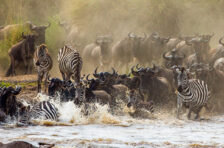

The Great Migration is often described as a single event, but it is really a continuous, year-round movement across the Serengeti-Mara ecosystem. More than a million wildebeest, joined by zebras and gazelles, follow the rains in search of fresh grass and water.
There is no exact calendar for the migration. Rainfall, grazing conditions and animal behaviour determine where the herds go next. But understanding the usual seasonal pattern can help you choose the Tanzania safari experience that suits you best.
January to March: calving season in Southern Serengeti and Ndutu
From January to March, the herds usually gather on the short-grass plains of Southern Serengeti and the Ndutu area. Seasonal rains create rich grazing, providing the nourishment needed for the wildebeest calving season.
The peak is often around February, when thousands of calves may be born each day. This concentration of newborn animals attracts predators, making it an especially exciting time to see lions, cheetahs, hyenas and leopards in action.
This is the best period for travellers who want to see the beginning of the migration cycle, dramatic predator encounters and fresh green landscapes. It is also excellent for photographers, with vivid skies and wide-open plains.
April and May: the long rains and the journey west
As the long rains arrive, the herds begin to move west and northwest from Ndutu through Central Serengeti. The landscape is green, the grass is long and the migration spreads across a wide area.
April and May are often quieter months for safari travel, offering a more peaceful experience and beautiful scenery. Roads can become challenging after heavy rain, but this is also when the Serengeti feels especially wild and uncrowded.
This season suits travellers who enjoy dramatic skies, lush landscapes and the atmosphere of the migration without the peak-season crowds.
June: the rut and the Western Corridor
By June, many of the herds are usually moving through the Western Corridor, a region shaped by the Grumeti River and woodland landscapes. This is the start of the dry season and a major turning point in the migration.
June is also known for the wildebeest rut, when males compete for territory and breeding opportunities. The plains become noisy and energetic as thousands of animals gather, chase and challenge one another.
For guests who want to see the migration in motion, with large herds and changing landscapes, June can be an excellent choice.
July to October: Northern Serengeti and Mara River crossings
From July to October, the migration is often found in Northern Serengeti near the Mara River. This is the season most people picture when they imagine the Great Migration: huge herds gathering on the riverbanks before attempting to cross.
A river crossing is not guaranteed. Herds may wait for long periods, change direction or cross when no vehicle is nearby. When a crossing does happen, however, it is one of Africa’s most dramatic wildlife experiences, with wildebeest and zebras entering the river while crocodiles and predators wait nearby.
Northern Serengeti is ideal for travellers who want the possibility of river crossings, a remote wilderness setting and excellent general wildlife viewing. It is also one of the busiest periods, so early planning is strongly recommended.
November: the return south
When the short rains begin, the herds usually start their journey south from Northern Serengeti and the Maasai Mara ecosystem. They move through Central and Eastern Serengeti, following the fresh green shoots that appear after the rains.
November can be a wonderful time to see large herds moving across the plains, often with fewer visitors than during the peak river-crossing season. The landscapes begin to turn green again, and the migration feels active and purposeful.
This is a great choice for travellers looking for a quieter safari while still experiencing the movement of the herds.
December: back to the southern plains
By December, many herds have returned to Southern Serengeti and Ndutu, beginning the cycle once again. The plains are greener, the grazing improves and the first calves may begin to arrive.
This is a beautiful time to combine safari travel with the festive season or a Zanzibar beach extension. The wildlife is abundant, the scenery is fresh and the anticipation of calving season is already building.
Which migration experience is right for you?
Choose January to March for calving season and predator action in Ndutu. Travel in April and May for lush green scenery and quieter game drives. Visit in June for the rut and movement through the Western Corridor. Plan for July to October if Mara River crossings are your dream. Consider November and December for migrating herds, green-season scenery and fewer crowds.
Because the migration follows nature rather than a fixed timetable, the exact location of the herds can change from year to year. Key Safaris will help you choose the best region, route and accommodation for your preferred travel dates.