
There are few places on earth that create a first impression like the Ngorongoro Crater. From the rim, the view opens onto a vast green bowl surrounded by steep volcanic walls, with grasslands, forests, lakes and wildlife spread across the crater floor below.
It is a landscape that feels separate from the rest of the world—an enclosed ecosystem shaped by an ancient volcano and filled with an extraordinary concentration of life.
A landscape born from a giant volcano
Ngorongoro Crater was formed millions of years ago when a huge volcano collapsed after a major eruption. What remains is the world’s largest intact volcanic caldera, measuring roughly 20 kilometres across and dropping about 600 metres from rim to floor.
The descent into the crater is an experience in itself. As your safari vehicle winds down the steep road, the landscape changes from highland forest to open grassland. From above, you can see herds moving across the plains, small tracks leading towards water and the pale shimmer of Lake Magadi in the distance.
Once you reach the crater floor, the scale of the place becomes even more striking. The towering walls form a natural boundary around the wildlife below, creating the feeling that you have entered a world within a world.
One of Tanzania’s richest wildlife areas
Ngorongoro Crater is renowned for its remarkable wildlife density. Its mix of grassland, woodland, swamps and lakes supports a wide range of animals throughout the year, making it one of the most rewarding places for game viewing in Tanzania.
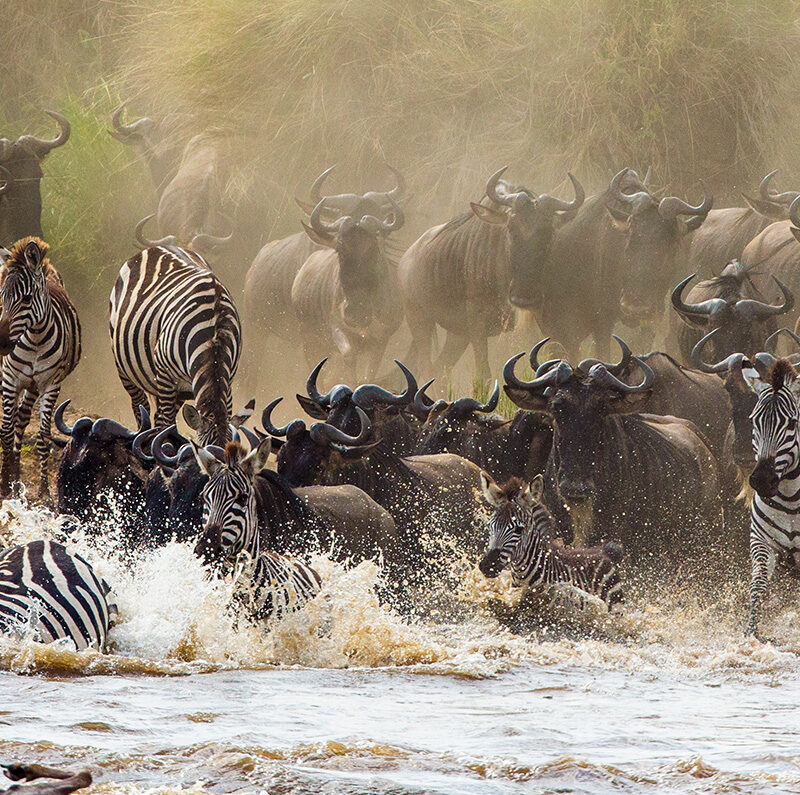
During a game drive, you may see lions, buffaloes, zebras, wildebeest, hippos, hyenas, jackals, gazelles and elephants. The crater is also one of the best places in Tanzania to search for the endangered black rhino, although sightings remain a privilege rather than a guarantee.
For travellers hoping to see the Big Five, Ngorongoro offers an excellent opportunity. Lions and buffaloes are commonly seen, elephants are present, leopards occasionally appear in the forested areas and black rhinos are protected within the wider crater ecosystem.
Lake Magadi and the life around it
At the centre of the crater lies Lake Magadi, a shallow seasonal soda lake. Its changing colours and reflective surface add another layer of beauty to the crater landscape.
Flamingos may gather along the lake’s edges, joined by other bird species that thrive in the wetlands and open grasslands. The crater is home to a remarkable variety of birds, from large birds of prey soaring above the rim to smaller species moving through the grass.
Nearby, the hippo pool provides one of the most popular picnic locations in the crater. It is a place to pause, enjoy lunch and take in the remarkable feeling of being surrounded by wildlife and ancient volcanic walls.
More than a game drive
A Ngorongoro Crater safari is not simply about seeing animals. It is about the atmosphere of the place: morning mist lifting from the highlands, a lion resting in the tall grass, distant zebra herds moving beneath the crater walls and the constant sense of being inside a landscape shaped by deep time.
The crater is part of the wider Ngorongoro Conservation Area, a UNESCO World Heritage Site where conservation, culture and wildlife are closely connected. Maasai communities live in the surrounding highlands, maintaining a long relationship with this remarkable landscape.
Whether you include Ngorongoro as part of a short Northern Circuit safari or combine it with Serengeti, Tarangire and Lake Manyara, it is a destination that leaves a lasting impression.
Travel with Key Safaris and discover a world within a world.